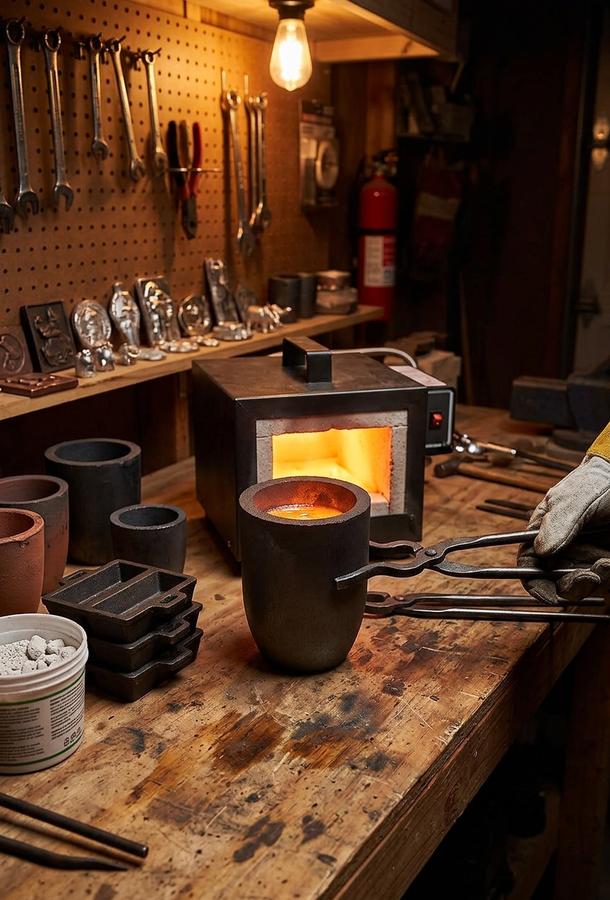
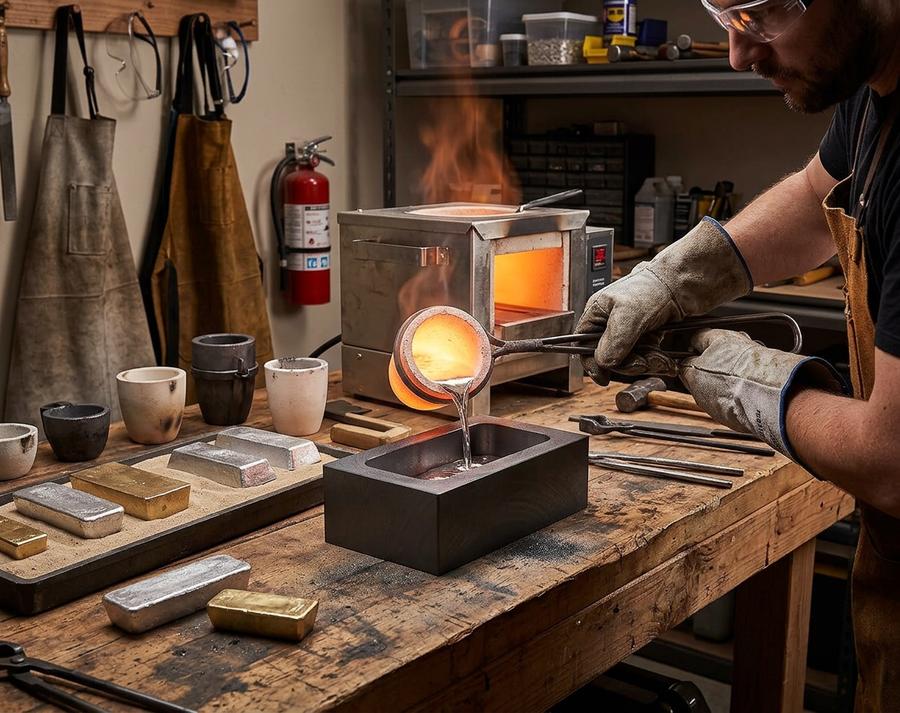
Molten Masters Melting Furnaces & Casting Kits: From a 0.5kg Ingot Mold to an 18KG Propane Furnace

Tired of pricing out an 18KG furnace, a crucible, tongs, and an ingot mold as four separate orders before your first pour? Molten Masters ships all of it in one carton, and buyers hold that equipment at a 4.5★ average across 765 verified ratings. The catch worth knowing before you buy: the tongs bundled with the propane kits come sized wrong for some crucibles, and the pick below works around it.

Pick the electric lead pot for fishing weights and you plug it into a wall outlet — no gas line, no regulator to source. Choose a propane kit instead and you get outdoor power for brass and copper charges. What separates them is clearance, heat source, and whether a 120V circuit has to carry the load. Decide that first and the rest of the choice narrows fast.

🛡️30-Day Retailer Return Window
📄1-Year Warranty on the Graphite Ingot Mold
☎️Direct Customer Support
4.5★ Across 765 Verified Ratings

Our Casting Equipment

Entry-level molds through flagship chambers, from a 500g ingot capacity to an 18KG melt, sorted by what each one holds.
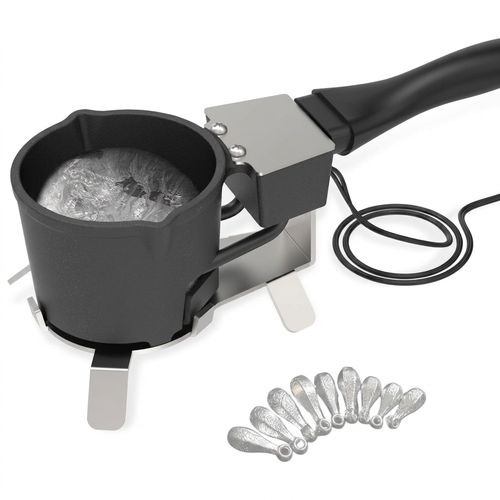
Electric Lead Melting Pot, 5 lb Capacity

Electric Lead Melting Pot, 5 lb Capacity

★ 4.4 (186 verified ratings)

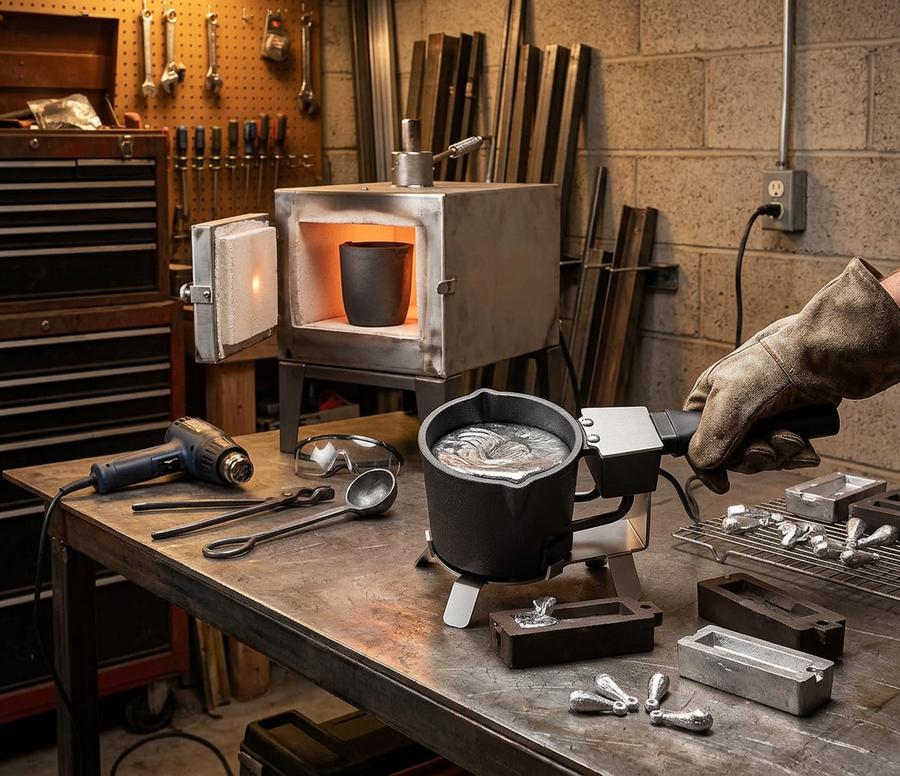
Drop wheel weights and old chimney flashing into the cast-iron pot on a Thursday evening, and one full fill pours more than a hundred 300-grain slugs before you top it up. A thickened heating element and a stainless-steel base hold the pot steady on a bench, and the easy-pour spout meters lead into sinker and bullet molds without a ladle. Warm-up takes a few minutes longer than a torch setup, and the pot sits at the entry tier for a reason.

  • Holds 5 lbs of lead at up to 750°F, and at 3.23 lbs it lifts off the bench into a tackle cabinet
  • Cast iron carries thermal mass, so adding cold lead mid-session does not crash the pot temperature
  • Covered by the retailer's 30-day return window; check the handle mount on arrival
Check price
18KG Propane Melting Furnace Kit

18KG Propane Melting Furnace Kit

★ 4.3 (88 verified ratings)

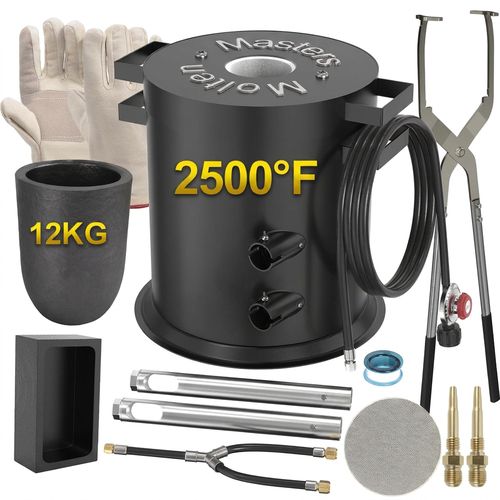
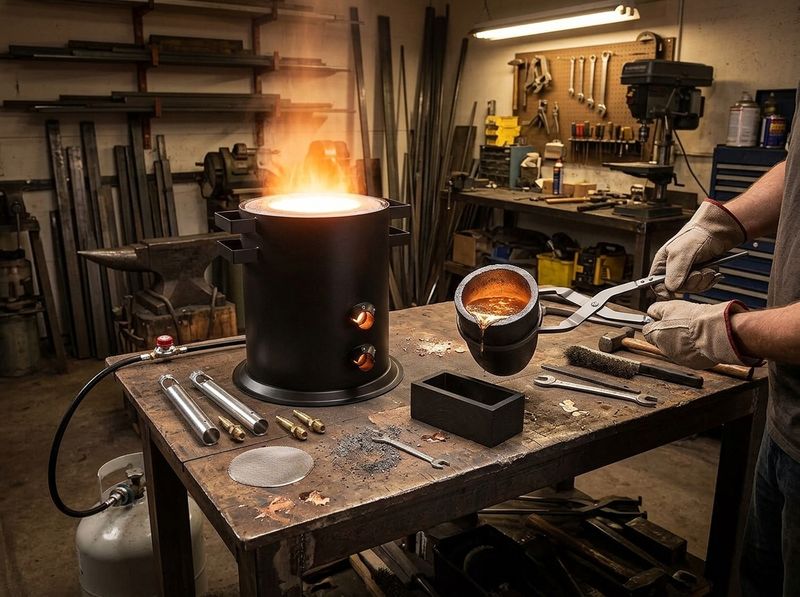
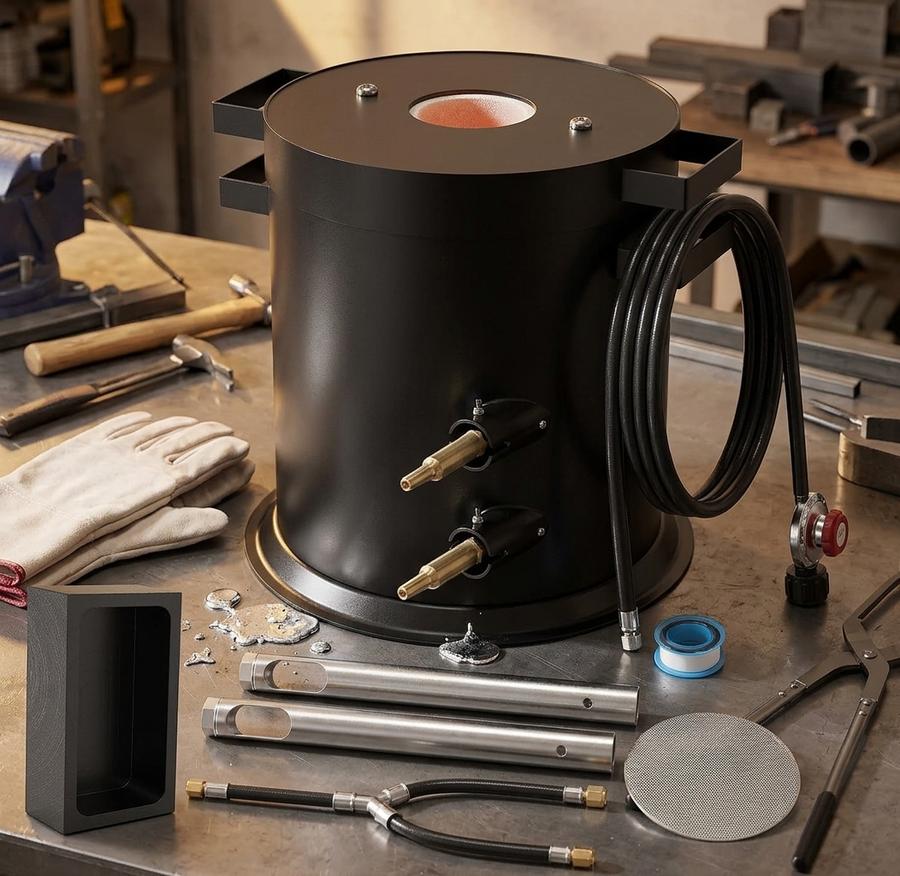
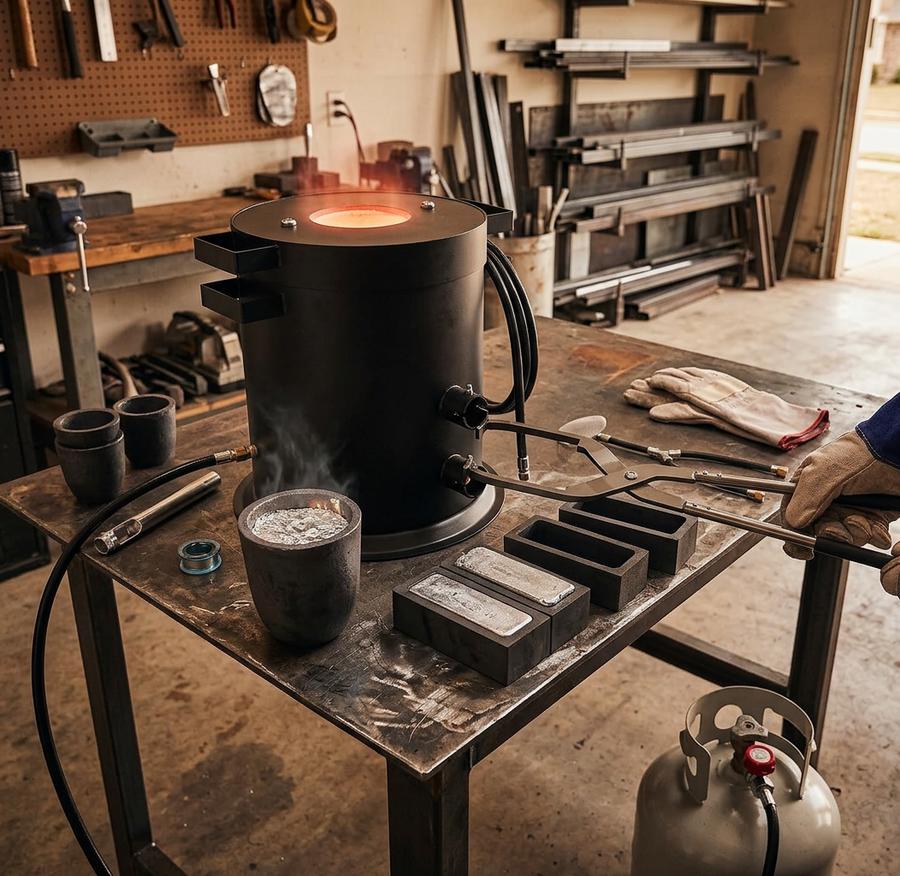
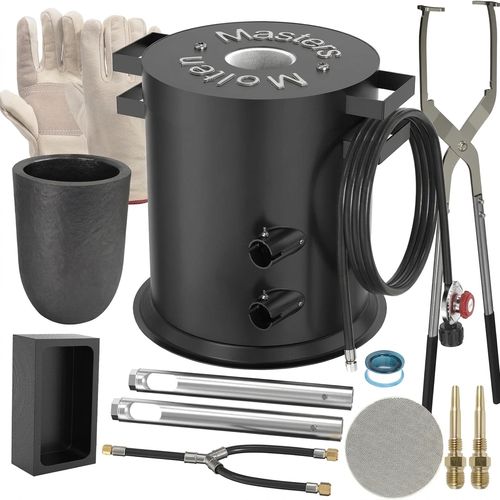
Eighteen kilos of aluminum or brass go into one chamber, and a 135,000 BTU burner pushes the core to 2500°F, well clear of the 1,984°F copper needs. A 1-inch insulation layer behind a high-temperature exterior coating keeps heat in the shell, which is why the climb stays fast. This carton also holds the crucible, tongs, graphite ingot mold, gloves, burner, hose, regulator, and manifold splitter. Stage the mold and tools before lighting, because working heat arrives fast.

  • 18KG of capacity in one chamber, enough for a full bin of scrap aluminum per session
  • An adjustable valve trims the flame down for lead and opens up for brass and copper
  • Covered by the 30-day retailer return window; sellers have replaced broken tiles and fire brick on report
Check price
Metal Casting Kit with Graphite Crucible

Metal Casting Kit with Graphite Crucible

★ 4.4 (14 verified ratings)

Small jewelry pours need a crucible that fits the piece, not an 18KG chamber, and this graphite cup sizes down to a few grams of gold or silver. High-density graphite conducts heat quickly in both directions, so a small charge reaches pour temperature fast and the ingot cools without a long wait at the bench. One caveat buyers name: the crucible is genuinely small, so a charge carrying heavy dross will feel cramped. Entry tier, and it pairs with a benchtop furnace rather than replacing one.

  • Graphite and quartz crucibles plus a 5-in-1 ingot mold, a whole jewelry bench in a 1.39-lb box
  • High thermal conductivity pulls heat in fast and lets the cooled ingot release without sticking
  • Where a bare crucible leaves you sourcing tongs and stir rods, both ship alongside it
Check price
10KG Silicon Carbide Graphite Crucible

10KG Silicon Carbide Graphite Crucible

★ 4.6 (135 verified ratings)

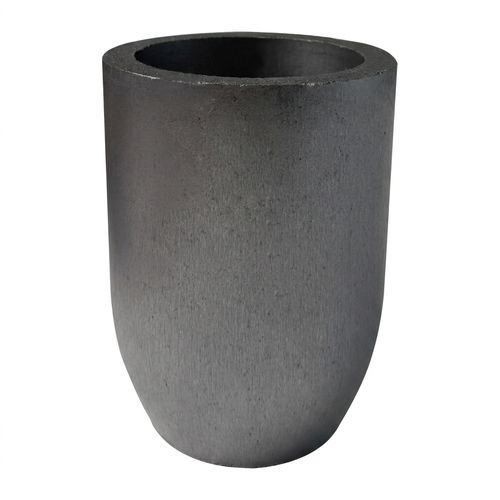
Sized at 1200 mL with a 4.9-inch inside diameter and 5.5 inches of depth, this cup swallows a working charge without crowding the melt against the rim. Silicon carbide blended into graphite absorbs the thermal shock that splits plain clay, which is what lets the wall survive heat cycle after heat cycle. This one moves between propane chambers, kilns, natural gas furnaces, coke ovens, and coal furnaces. One buyer whose rim failed early was offered a refund or a replacement, plus a spare cup.

  • 1200 mL and 5.13 lbs, a full brass charge lifted in one motion
  • Silicon carbide raises the thermal-shock ceiling well past a clay crucible's working limit
  • Ranked #1 in the Lab Crucibles category, rated 4.6★ by verified buyers
Check price
3KG Gold Melting Furnace Kit

3KG Gold Melting Furnace Kit

★ 4.2 (21 verified ratings)

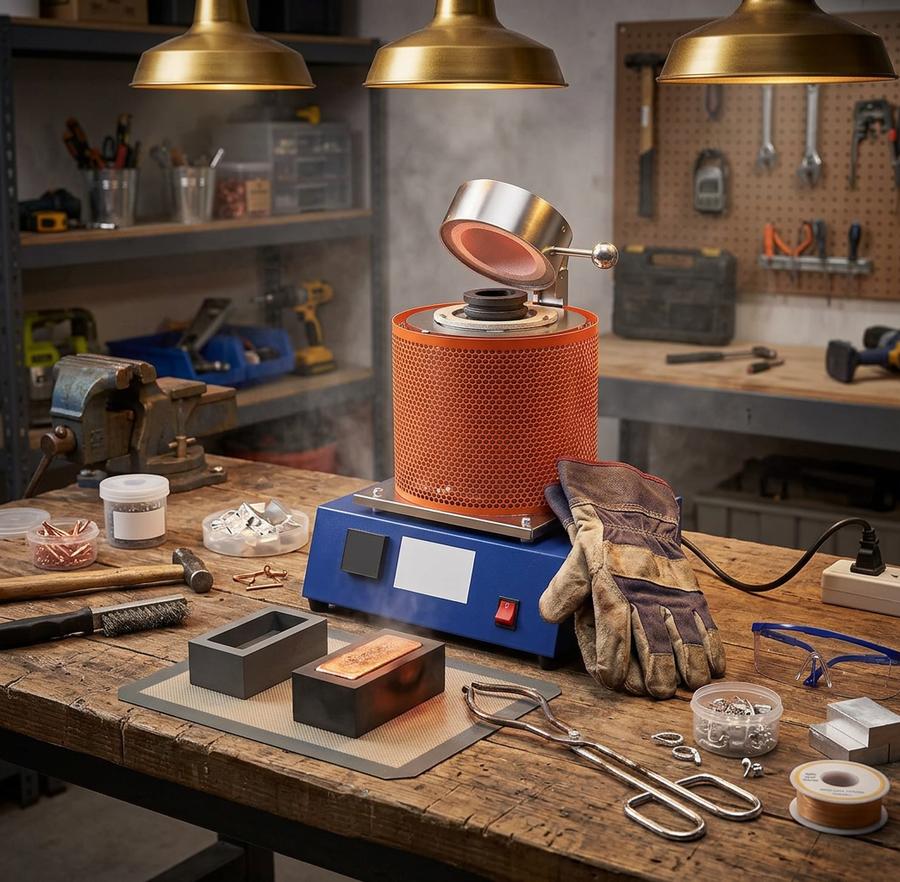
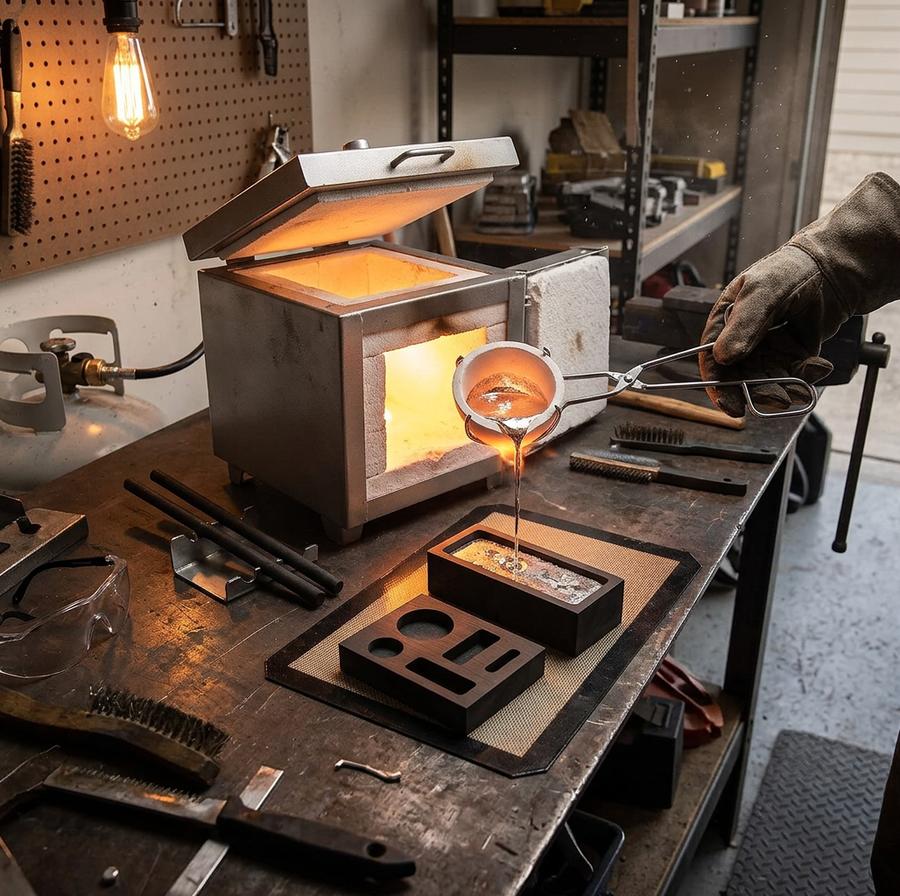
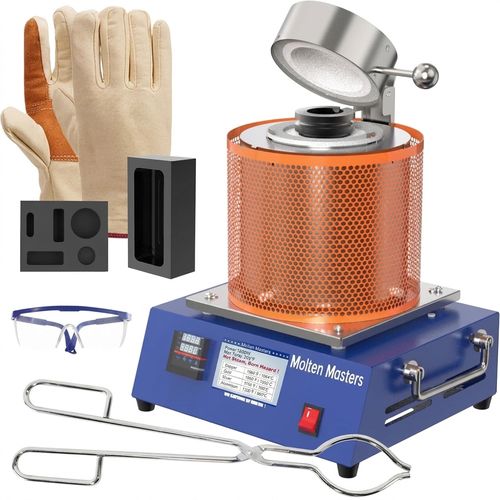
Melting gold on a dining table rules out a propane burner, and a 1500W benchtop chamber running to 2102°F does the same work off a 120V outlet. Heavy-duty steel housing and an insulated protective mesh keep hot surfaces away from a hand reaching past. This ships with a 3KG graphite crucible, a graphite ingot mold, a 5-slot mold, tongs, gloves, and safety goggles. Plan on replacing the crucible before the furnace itself: one owner reports about 30 pours from a cup.

  • 3KG crucible capacity, with gold or silver melted in 40 to 50 minutes
  • PID control with a 4-button LED readout replaces dial guesswork with an actual number
  • Half-year manufacturer warranty stated; run it on a dedicated circuit, not a shared GFCI
Check price
0.5kg Graphite Ingot Mold

0.5kg Graphite Ingot Mold

★ 4.6 (233 verified ratings)

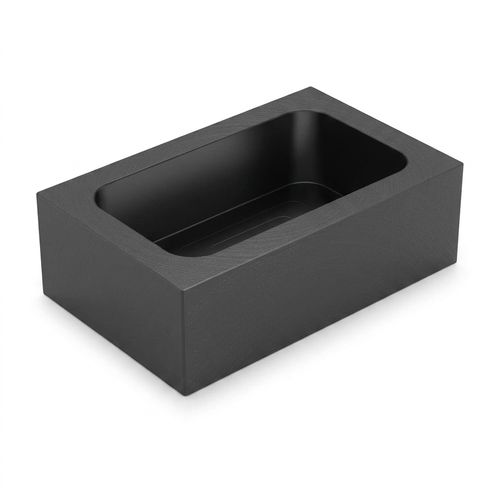
Pour 500 g of molten gold or 265 g of silver into a 2.71-inch mold and the bar drops out clean when it cools, with no tapping and no prying. Graphite under 0.1% ash keeps contaminants out of the casting surface, and self-lubricating properties release the ingot without a mold wash. One owner has run it two years on silver from sand-cast projects with no deterioration, and another counted seven pours of copper with no sign of wear.

  • Holds 500 g of gold or 265 g of silver in a 2.24 x 1.26 x 0.63-inch cavity
  • Self-lubricating graphite releases the ingot without a mold wash or a release agent
  • 1-year manufacturer warranty stated, the longest coverage on any piece here
Check price
12KG Smelting Furnace Kit

12KG Smelting Furnace Kit

★ 4.3 (88 verified ratings)

Twelve kilos of capacity sits between a benchtop crucible and the 18KG chamber, sized for a caster who outgrew small pours but does not need the largest shell. Dual insulation at the burner entrance holds heat where a single-lined chamber leaks it, which keeps climb times short even on a cold morning. A 30PSI adjustable American-standard regulator arrives already paired to the burner. Rinsed aluminum cans drop to liquid in roughly ten minutes at full output.

  • 12KG capacity, with a bin of rinsed cans cleared in one Saturday session
  • Dual insulation at the burner entrance keeps heat inside instead of bleeding it through the mouth
  • Where a furnace-only listing ships a bare shell, the crucible, tongs, mold, and gloves come with it
Check price
What a Complete Home Foundry Kit Changes

Buyers weigh this kit against furnace-only listings on batch capacity, how long a crucible survives past 1800°C, and what actually ships.

Run a Full Lead Batch Without a Refill

Load the cast-iron pot with wheel weights or range scrap and the 5-lb fill runs a whole evening of bank sinkers before you top it up.

Push the Crucible Wall Past a Clay Cup's Limit

Silicon-carbide graphite rated to 3272°F carries brass and copper pours that sit well past the point where a clay wall lets go.

Open One Carton and Start the Same Day

Nothing waits on a second delivery. A kit that lands Tuesday can pour Tuesday evening instead of sitting until the missing accessory shows up.

Stop Reordering a Crumbled Crucible

Stop reordering a cup that crumbled at the rim two sessions in. Carbide walls keep taking heat cycles long after clay quits.

Pour Your First Ingot the Afternoon It Lands

Picture a Saturday: unbox at noon, warm the crucible by one, and a 500g gold-capacity mold holds your first clean bar before dinner.

Send It Back if a Tile Arrives Cracked

Ceramic honeycomb tiles sometimes crack in transit, as buyer reviews document. The 30-day return window covers that, and the graphite mold carries a 1-year warranty.

From Sealed Carton to First Poured Ingot

A 500°C preheat sits between the delivery box and a cooled ingot, and that step is where most first pours fail.

1

Unbox the Complete Kit

Lay out the furnace, crucible, tongs, ingot mold, and gloves before lighting anything.

2

Preheat the Crucible Empty

Run the empty crucible at 500°C for ten minutes so trapped moisture leaves before metal goes in.

3

Plug In or Light the Burner

The electric pot runs off a standard outlet. The propane kit needs a 30PSI regulator and a standard tank.

4

Pour, Cool, Release

Tip the crucible into the graphite mold, let it cool, and the ingot drops out without sticking.

The Pours These Kits Were Built Around

A 1,984°F copper charge, a gold set point held without babysitting, and a crucible still sound in its second season.

Melt a Full Brass Charge in a Single Heat Cycle

Melt a Full Brass Charge in a Single Heat Cycle

The 18KG propane kit fires a 135,000 BTU adjustable burner through a 30PSI regulator, holding a 2500°F core long enough to work a brass charge rather than just touch temperature and fade. Stage the mold and tongs before you light it; the chamber reaches working heat faster than most first-timers expect. One caster ran roughly 500 aluminum cans through the same kit with no chamber failure.

  • Light it outdoors with a paper taper at the burner mouth, then open the gas slowly until the tornado flame roars.
  • Owners run it off a standard propane bottle, the same exchange tank a gas grill uses, with no special fitting to source.
  • One owner melted a large aluminum piece in under five minutes with the valve only partway open, so full output is rarely needed.
See the 18KG Propane Melting Furnace Kit
Hold a Gold Set Point Without Watching the Dial

Hold a Gold Set Point Without Watching the Dial

The 3KG electric furnace runs 1500W to 2102°F and holds the set point through a PID controller with a 4-button LED display, so a gold or silver melt lands in 40 to 50 minutes. Owners melting copper on a GFCI circuit report trips, so give it a dedicated outlet. Switch the unit off before lifting the crucible out.

  • Warm the furnace and crucible at 550°F to 900°F for three to five minutes before the first charge goes in.
  • The PID loop trims power as the chamber overshoots, which is what keeps heating elements from cooking themselves early.
  • Where a dial-only furnace leaves you guessing at temperature creep, the LED readout shows the drift as it happens.
See the 3KG Gold Melting Furnace Kit
Get More Pours Before the Crucible Wall Gives Out

Get More Pours Before the Crucible Wall Gives Out

Silicon carbide takes repeated brass and copper pours to 1800°C without the glazing that ends a clay crucible, which is why the pour count runs several times higher. One owner melting brass and copper describes it as close to self-cleaning after a session. The wall tapers toward the base, so practice the lift with the crucible cold before you try it loaded.

  • Rated 4.6★ across 135 verified buyer reviews, with repeat buyers ordering several for the same bench.
  • Ordinary clay glazes and thins under repeated brass pours; carbide holds its wall thickness through the same schedule.
  • Where a straight-walled cup lifts cleanly, this tapered body needs a deliberate grip on the way out.
See the 10KG Silicon Carbide Graphite Crucible
Melt Whatever the Project Calls For, Gold Through Scrap Aluminum

Melt Whatever the Project Calls For, Gold Through Scrap Aluminum

A single furnace bench melts gold at 1,947°F, plus silver, copper, aluminum, brass, and lead, so one setup serves a jewelry pour on Saturday and a sinker batch on Sunday. Scrap aluminum, copper wire, and old brass fittings all go into the same chamber. Nothing here forces a second furnace when the project changes.

  • Drop clean aluminum wire into the propane chamber, pour to graphite ingots, then remelt those bars in a smaller electric crucible later.
  • Graphite does not react with gold or silver at pour temperature, which is why it stays the default for precious-metal work.
  • Where a single-purpose lead pot tops out well below copper, the propane chamber clears brass and copper without complaint.
Browse Every Casting Kit

The Numbers Other Furnace Pages Skip

Burner output in BTU, ash content under 0.1%, a 3272°F crucible ceiling: figures most furnace listings leave blank.

2–5× crucible life

Run brass through the 10KG carbide cup and the wall still holds at 1800°C, the point where an ordinary clay crucible splits. That buys two to five times the pour count before replacement.

Most crucible pages say 'thermal shock resistant' without a temperature or a pour-count multiple behind it.

manufacturer spec

135,000 BTU

Open the propane valve on the 12KG or 18KG chamber and the burner pulls 135,000 BTU through a 30PSI regulator, the same output on both chambers regardless of which capacity you pick.

Propane furnace pages rarely publish a burner BTU figure at all; most settle for 'high output'.

manufacturer spec

4.5★ / 765 ratings

Buyers hold Molten Masters at a 4.5★ weighted average across 765 verified ratings, counted across every rated product from the lead pot to the 18KG chamber, not one flagship's isolated score.

Most no-name furnace pages show a single product's star line, not a verified base spanning a whole brand.

765 verified buyer reviews, weighted across every rated product

PID digital control

Set a target on the 3KG electric furnace and the PID loop trims power to hold it, instead of leaving you to chase a dial as the chamber overshoots its mark.

Most electric furnace pages promise 'temperature control' without naming the control method behind it.

manufacturer spec

<0.1% ash graphite

Weigh a poured silver bar against one from a no-name mold and the difference shows on the face: graphite rated under 0.1% ash transfers nothing into the surface it touches.

Graphite mold pages rarely quantify purity; an ash-content figure almost never appears.

manufacturer spec

5 tools, 1 box

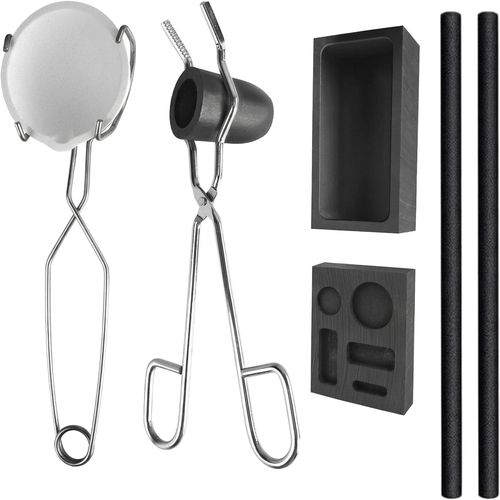
Open the casting kit to a graphite crucible, a quartz crucible, an ingot mold, two stir rods, and crucible tongs, with nothing left to order before the first melt.

Furnace and crucible pages usually treat tongs and molds as separate add-ons rather than boxed together.

manufacturer spec (bundle contents)

5 lb / 750°F

Fill the cast-iron pot with 5 lbs of lead and run it to 750°F, leaving headroom above the roughly 700°F pour point that sinker and bullet casters target.

Lead pot pages usually give a capacity or a maximum temperature, rarely both on the same line.

manufacturer spec

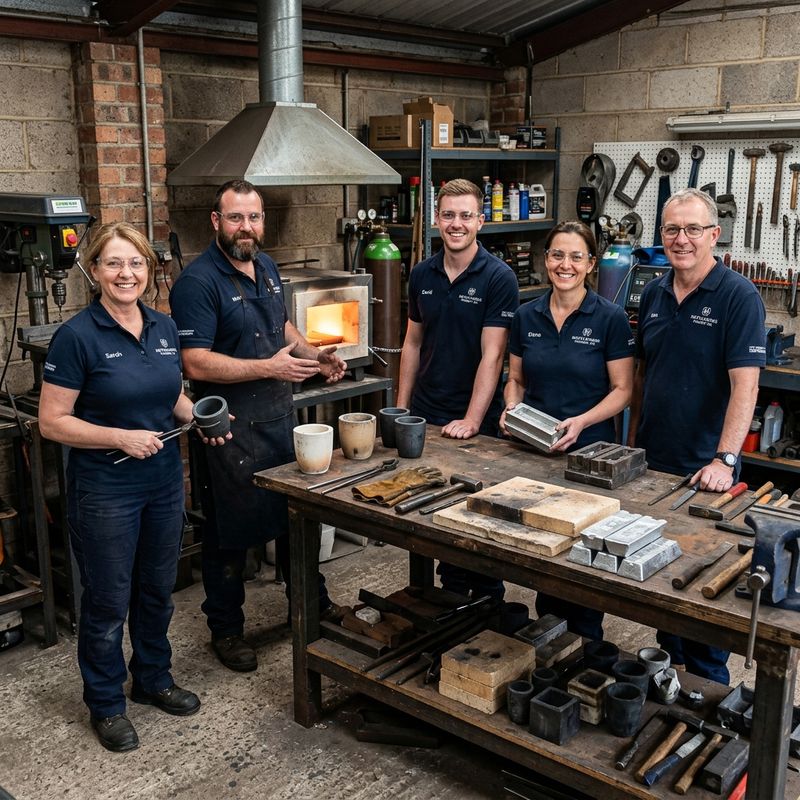
Molten Masters home foundry workshop

One Brand Across Three Casting Benches

Molten Masters covers the whole home-foundry bench: a lead pot for fishing weights, silicon-carbide crucibles, graphite ingot molds, and propane melting furnace kits that carry a 12KG or 18KG charge.

You will find MMasters stamped on most of the packaging. Same maker, shorter name.

The span is what matters. Start at the entry end with a graphite ingot mold and you can cast cooled scrap into clean bars on a kitchen table. Step up to the 18KG propane chamber and you are melting brass outdoors on a gravel pad instead. Crucibles and molds sized for one line drop into the other, so moving up does not mean rebuying every accessory. The 10KG crucible also drops into kilns, coke ovens, and coal furnaces outside this line.

Equipment has been shipping since June 2024. Two details the spec sheets skip. The bundled tongs miss the right crucible size on the propane kits. A stated manufacturer warranty covers only part of what you can order. Both are worth knowing before you pick a tier.

Learn More →

What Buyers Say After the First Pour

Real feedback pulled from verified buyers across the casting bench, the crucible, and the furnace kits.

★★★★ 4.4

“This little thing is awesome, very easy to use and melts great. Perfect for anyone wanting to make your own fishing weights.”

J. Rourke Verified Purchase Electric Lead Melting Pot, 5 lb Capacity
★★★★ 4.3

“This unit uses a 30lb gas regulator and a standard propane bottle. I have melted about 500 cans with it and had no issues at all. It worked as advertised.”

T. Nakamura Verified Purchase 18KG Propane Melting Furnace Kit
★★★★ 4.4

“This melting and casting kit is very handy for small metal projects. The graphite crucible and molds feel solid and hold up well under high heat.”

S. Alvarez Verified Purchase Metal Casting Kit with Graphite Crucible
★★★★★ 4.6

“Wow, hands down the best crucible I've ever used. I melt brass and copper and it basically cleans itself.”

D. Okafor Verified Purchase 10KG Silicon Carbide Graphite Crucible
★★★★ 4.2

“Works great so far, melts copper no problem. Would recommend to anyone setting up a benchtop gold pour.”

R. Fenwick Verified Purchase 3KG Gold Melting Furnace Kit
★★★★★ 4.6

“Durable, great size, easy to use. Has lasted 2 years for excessive silver from my sand-casted projects, perfect value for the shop.”

M. Delacroix Verified Purchase 0.5kg Graphite Ingot Mold
★★★★ 4.3

“I am impressed with this little furnace kit. It worked really well for the first burn and was easy to set up. It reaches melting point fairly quickly.”

K. Vasquez Verified Purchase 12KG Smelting Furnace Kit
★★★★ 4.4

“Great for a hobby guy wanting to make his own lures. Gets the lead hot fast and holds plenty for a full session.”

P. Bramwell Verified Purchase Electric Lead Melting Pot, 5 lb Capacity

Spec by Spec Against a Furnace-Only Listing

Capacity from 0.5kg to 18KG, crucible material, burner output, and what ships in the box, against a typical single-product page.

Criterion Molten Masters Typical Furnace-Only Listing
Melting capacity 0.5kg ingot mold through an 18KG propane chamber One fixed capacity per listing
Crucible material Silicon-carbide graphite, rated 1800°C / 3272°F Plain clay or ceramic on most budget kits
Burner output 135,000 BTU, adjustable, 30PSI regulator included 'High output' with no BTU figure published
Temperature control PID digital with LED readout on the electric furnace; adjustable flame on propane Manual flame only, no digital readout
What ships in the box Furnace or pot, crucible, tongs, ingot mold, gloves Furnace only; accessories ordered separately
Verified rating base 4.5★ weighted across 765 verified ratings, every rated product One product's isolated star line
Safety gear included Heat-resistant gloves and goggles on furnace kits PPE sold as a separate add-on

Day 1 Through the Second Season

Day 1 runs about an hour from carton to cooled ingot, and the arc past that stretches into a second season.

Day 1

Unbox onto fire brick, not bare concrete. Bring the empty crucible up to heat, run one test pour, and check every ceramic tile that evening. Returns stay open for 30 days if a piece arrived cracked.

Week 1

Log warm-up time and pour temperature across two or three sessions. Most first-week failures trace back to metal that went in before the crucible was hot.

Month 1

Swap between sinker batches, ring blanks, and scrap aluminum on the same chamber. Nothing needs a second furnace as long as the charge fits the crucible.

Year 1+

The graphite ingot mold's 1-year manufacturer warranty is still live, and a carbide crucible that gets warmed empty every session is still taking pours.

Ready for Day 1? Browse Every Casting Kit

What Actually Goes Wrong, and What Covers It

Chipped crucible rims after 2 pours, cracked tiles in transit, mismatched tongs: the complaints that repeat, and what covers each.

The Crucible Rim Crumbles After a Couple of Pours

One owner got two melts out of a crucible before the edge fell apart, and by then the return date had passed. Run it empty and up to heat before metal goes in, and toss the flux-heavy routine: glassy slag is what eats a wall from the inside. That buyer reported it anyway, and the seller sent a refund offer plus a spare cup.

4.6★ across 135 verified ratings on the standalone crucible

The Ceramic Honeycomb Tile Shows Up Cracked

Rip open the carton and check the tile and fire brick before anything else, because several buyers found theirs broken in transit. Photograph any damage before unpacking further; that record settles a replacement request fast, and sellers have swapped both parts without argument on record.

The Tongs in the Box Are the Wrong Size

Buyers on both propane kits say the same thing: good tongs, wrong dimensions for the crucible that ships beside them. Pull them out of the workflow and budget for a properly sized pair before the first pour. This is the single most repeated complaint on the propane chambers, and naming it beats discovering it with metal already molten.

Steam Flash From a Cold, Damp Crucible

Kill the shortcut of loading metal into a cold cup. Trapped moisture flashes to steam under molten metal and splits the wall, and the same physics applies when a hot crucible touches bare concrete. Set it on fire brick and give it the warm-up cycle every session, not just the first one.

The Warranty Column Is Blank on Most of What You Would Buy

Stop assuming coverage is uniform here. A stated manufacturer warranty appears on the 0.5kg graphite ingot mold at one year, and on the 3KG electric furnace at half a year. Everything else falls under the retailer's 30-day return window. Test your unit hard inside that first month and ship it back if it fails.

Two-Year-Class Coverage Named Above — Pick a Kit to Compare Specs

Who Ends Up Buying This Equipment

Sinker casters, kitchen-table jewelers, reloaders building a first foundry, and the scrap recycler turning cans into 500g bars.

The Sinker Caster Who Stopped Guessing Pour Temperature

You cast bank sinkers and jig heads for surf trips, and a hot plate under a cast-iron pan never held a steady number. A dedicated pot runs a full charge of lead hot enough for a clean pour, so wrinkled casts from cold metal stop being the default outcome.

The Jewelry Maker Melting Gold on a Kitchen Table

Your workspace is a dining table and one dedicated outlet. A 1500W benchtop furnace and a 0.5kg graphite mold turn 500g of scrap gold into a clean bar without a torch setup, a gas line, or outdoor clearance.

The Reloader Setting Up a First Home Foundry

You have a garage, a propane tank, and range scrap piling up in a bucket. A 12KG or 18KG chamber melts that down outdoors, and the gloves and tongs arrive with it instead of on a second order a week later.

The Recycler Turning a Bin of Cans Into Ingots

A bin of rinsed cans clears in one session in the propane chamber. Pour into a graphite mold, stack the bars on a shelf, and remelt them in a smaller electric crucible when a project finally needs them.

Who This Is Not For

  • Not the right fit if you need UL or CE certified equipment for a commercial production run. Nothing here carries a stated certification, so it stays hobby-tier by design.
  • Skip the 3KG electric furnace if your shop runs off a shared power strip. It wants a stable dedicated 120V outlet on its own breaker.
  • Pass on the propane kits if you need correctly sized pouring tongs out of the box. Buyers consistently report a mismatched fit and end up buying a separate pair.

Common Questions Before You Buy

Straight answers on capacity, warranty, and which chamber fits which project.

What is Molten Masters?

Molten Masters builds hobbyist metal melting and casting equipment: electric lead pots, silicon-carbide graphite crucibles, graphite ingot molds, and propane and electric furnace kits. The range runs from a 0.5kg ingot mold up to an 18KG propane chamber. Packaging often carries the shorthand MMasters. Equipment has been shipping since June 2024, which makes this a relatively young maker rather than a long-established one.

Who is this equipment actually built for?

Three benches share this equipment. Fishing-tackle casters pour bank sinkers and jig heads from a lead pot. Jewelry makers melt gold and silver in a benchtop electric furnace and cast into graphite molds. Reloaders and scrap recyclers run range lead or aluminum cans through a propane chamber outdoors. The crucibles and molds are sized to move between those uses rather than lock you into one.

What factors should I consider when choosing a melting furnace?

Four things decide it. Melting capacity has to exceed your usual batch, with 10 to 20 percent headroom above the charge. Maximum temperature must clear your metal's melting point, so 1,947°F for gold and higher for copper. Heat source determines where you can work: electric runs indoors on 120V, propane needs outdoor clearance. Last, check whether the crucible, tongs, and mold ship with it.

Can a complete beginner use this without foundry experience?

Beginners make up a large share of these buyers, and the kits assume it. The electric lead pot is plug-and-use with an easy-pour spout. The propane chambers need more setup: connect the hose and regulator, light the burner outdoors, and open the gas slowly. The real learning curve is not the equipment but the discipline of warming a crucible empty and never rushing a pour.

What metals will these furnaces melt?

Gold, silver, copper, aluminum, brass, and lead all fall inside the range, though not every unit covers every metal. The electric lead pot handles lead and tin only, topping out at 750°F. The 3KG electric furnace reaches 2102°F, enough for gold, silver, copper, aluminum, and bronze. The propane chambers hit a 2500°F core, which clears brass and copper comfortably.

What is the difference between a furnace, a crucible, and an ingot mold?

The furnace supplies heat, whether from a propane burner or an electric element. The crucible is the cup that holds metal inside that heat, usually graphite or silicon-carbide graphite. The ingot mold is the shaped cavity you pour into so cooled metal comes out as a stackable bar. A complete kit gives you all three, plus tongs to move the crucible safely.

Is melting metal at home legal in a residential neighborhood?

Local fire code, not the equipment, decides this. Propane chambers throw open flame and need outdoor clearance away from structures, dry grass, and overhangs. Some municipalities restrict open-flame equipment or require permits. Lead work carries its own handling rules for fumes and residue. Check your local fire marshal and any HOA restriction before the first burn, and always work in open air.

What temperature does the propane furnace reach?

Both propane chambers reach a 2500°F core temperature, driven by a 135,000 BTU adjustable burner fed through a 30PSI regulator. That clears the melting points of aluminum at 1,221°F, brass around 1,700°F, and copper at 1,984°F. One owner noted the chamber reaching working heat faster than expected, so stage your mold and tongs before lighting rather than after.

How much metal does the 18KG furnace hold?

Eighteen kilograms of charge fits the largest propane chamber, roughly 40 pounds of aluminum or brass in a single melt. The 12KG version sits one tier down for casters who outgrew benchtop pours but do not need the largest shell. Leave 10 to 20 percent headroom above the metal so expansion has somewhere to go rather than climbing the crucible rim.

What is the burner output on the propane kits?

Both propane kits list a 135,000 BTU maximum output through a 30PSI adjustable American-standard regulator. Flame output adjusts down as well as up, so aluminum and lead rarely need the valve anywhere near maximum. Save full output for brass and copper charges that demand the extra climb, and expect the chamber to reach working heat quickly once it is open.

What temperature does the electric gold furnace reach?

The 3KG electric furnace runs 1500W to a 2102°F maximum, or 1150°C. Gold melts at 1,947°F and silver at 1,763°F, so both sit inside that ceiling with room to spare. Copper at 1,984°F is achievable but close to the limit, and one owner reported reaching 1970°F reliably. For heavy copper work, the propane chamber is the better tool.

How long does a full melt take in the electric furnace?

Forty to fifty minutes brings a charge to temperature in the 3KG electric furnace. Add another 15 to 20 minutes past what the display shows, because the crucible and the metal inside lag behind the chamber reading. Owners who plan for roughly an hour from switch-on to pour report far fewer problems than those expecting a fast turnaround.

New Kits and Restock Alerts